The 1.5°C Line: Why Pakistan’s Glaciers are the World’s Last Defence
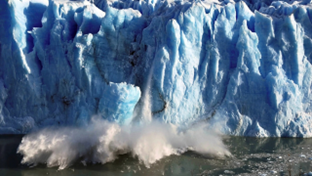
Stand at the base of any glacier in Pakistan’s northern territories today, and you are witnessing a transformation that once took millions of years happening in mere decades. These massive rivers of ice feeding the Indus basin are retreating at unprecedented rates, threatening the survival of two billion people downstream. However, a unique scientific reality gives Pakistan a narrow window of opportunity. While mid-latitude glaciers in Europe or the Tropics face near-total disappearance at current warming levels, Pakistan’s “Third Pole” possesses a fragile resilience that could be our greatest strategic asset if the world acts now.
Pakistan must become the global champion for the 1.5°C target. This is not just a climate slogan; it is a calculation for survival. According to the latest cryosphere research, limiting global warming to 1.5°C would allow High Mountain Asia to preserve roughly two-thirds (66%) of its ice mass. In stark contrast, the 2.3°C trajectory of current global pledges would cause us to lose over 50% of our glaciers, and a 3.5°C trend would lead to a total collapse of the mountain ecosystem. For Pakistan, the difference between 1.5°C and 3.5°C is the difference between a life-sustaining Indus River and a future of violent, seasonal floods followed by permanent, desert-like drought.
We are already fighting back with innovative adaptation measures, such as the indigenous art of glacier grafting and the construction of ice stupas in Gilgit-Baltistan and Chitral. These “frozen miracles” have proven that we can manually store winter water to delay spring shortages. However, these efforts currently exist only as small-scale community pilots, localised band-aids on a regional wound. To truly safeguard our national water security, these nature-based technologies must transition into a national-scale industrial strategy. Without a massive infusion of climate finance to expand these structures across every vulnerable valley, these projects will remain too small to counter the existential threat of a warming world.
Switzerland built a billion-dollar economy on retreating glaciers through strategic diversification. Pakistan can do the same, but unlike Switzerland, we are operating on a compressed timeline with far fewer resources.
This shift requires a fundamental reimagining of our mountain economy. Real resilience requires moving beyond disaster response toward climate-resilient cottage industries that turn environmental challenges into economic value. For example, medicinal and aromatic plants use 70% less water than traditional wheat and can triple a farmer’s income. Solar-powered processing units could transform the 40% harvest loss of mountain fruits into high-value exports, while climate-smart greenhouses protect crops from the unpredictable flash floods that now haunt our northern valleys. These are not just survival tactics; they are the building blocks of a billion-dollar mountain economy.
Crucially, the success of this transformation rests on the women of northern Pakistan. Often, the primary managers of household water and livestock, women are the front-line responders to climate shifts. Their leadership in managing community-based early warning systems ensures that disaster alerts reach every home, while their involvement in cottage industries like fruit processing and handicrafts creates a reliable economic safety net. When women are empowered with climate-smart technology, the entire community’s adaptive capacity increases, moving the region from a state of vulnerability to one of organised resilience.
However, empowering communities also means fixing the systemic flaws of the past. Pakistan has attempted large-scale protection through the GLOF-II project, supported by $37 million from the Green Climate Fund. While the project aimed to shield 30 million people, it has also served as a sobering lesson in the dangers of top-down management. Reports of administrative bottlenecks, non-functional sensors, and concerns over the transparency of fund utilisation have highlighted a critical “integrity gap.” For Pakistan’s September 2025 NDC 3.0 goal, which requires a staggering $565.7 billion to succeed, we must pivot toward a model of radical transparency. We don’t just need more funding; we need a management system that is community-owned and strictly audited, ensuring that every dollar reaches the high-altitude valleys where it is needed most.
Switzerland built a billion-dollar economy on retreating glaciers through strategic diversification. Pakistan can do the same, but unlike Switzerland, we are operating on a compressed timeline with far fewer resources. The glaciers are melting, which is not negotiable. But whether our communities face that future with prosperity or loss depends entirely on our ability to scale our solutions and hold the global community to the 1.5°C line. The cryosphere cannot wait, and neither can the demand for accountable, community-led action.